The Public Financial Management Regulations, 2019 (L.I. 2378), PFM (Public Investment Management) Regulations 2020 (L.I. 2411), and the Local Governance Act 2016 (Act 936) mandate Metropolitan, Municipal and District Assemblies (MMDAs) to prepare budgets. In addition, the Composite Budget Manual, Program Based Budgeting Manual, Fee Fixing Guidelines, and the Internally Generated Fund (IGF) Strategy and Reference Guide serve as complementary resources to enhance the budget preparation process.
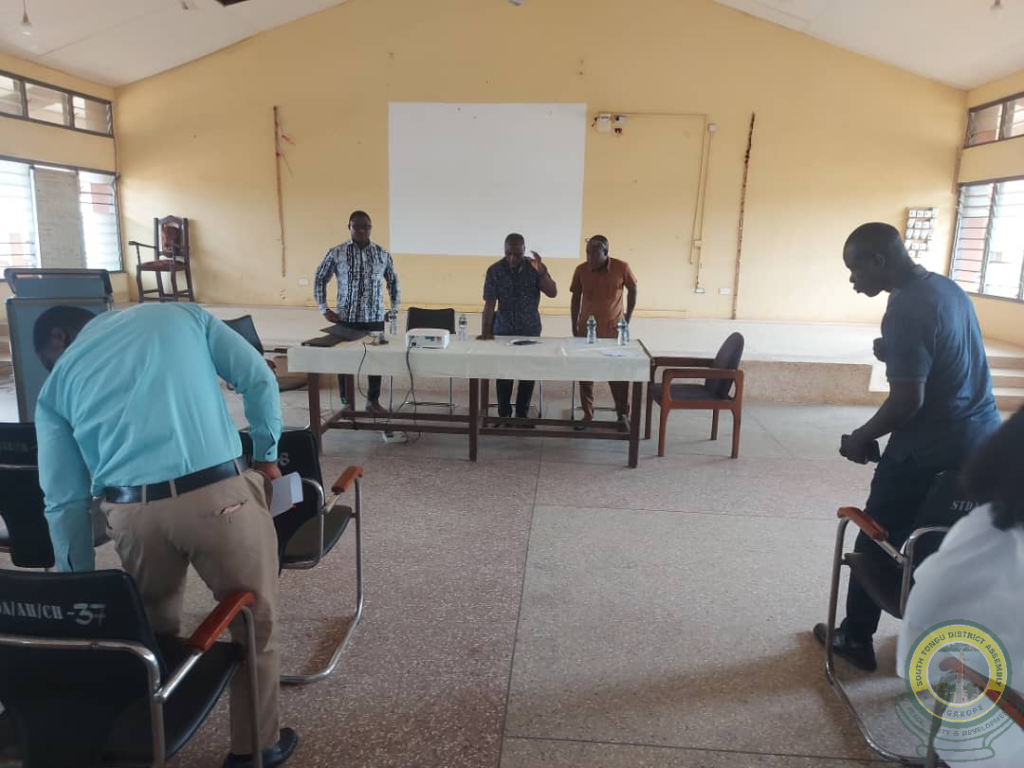
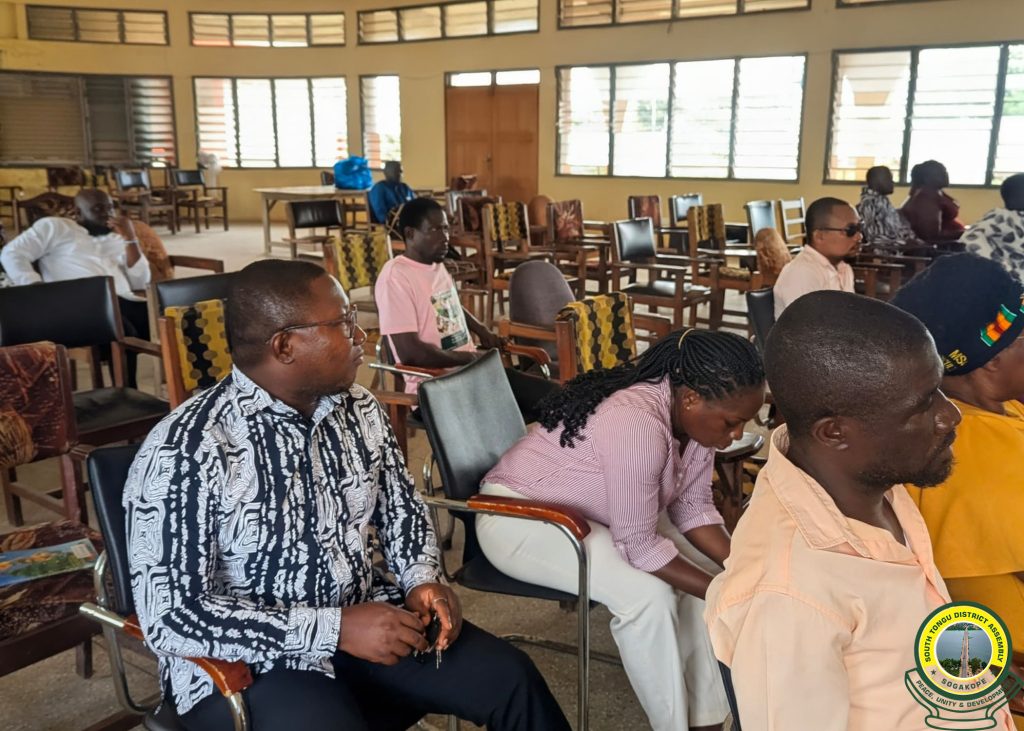
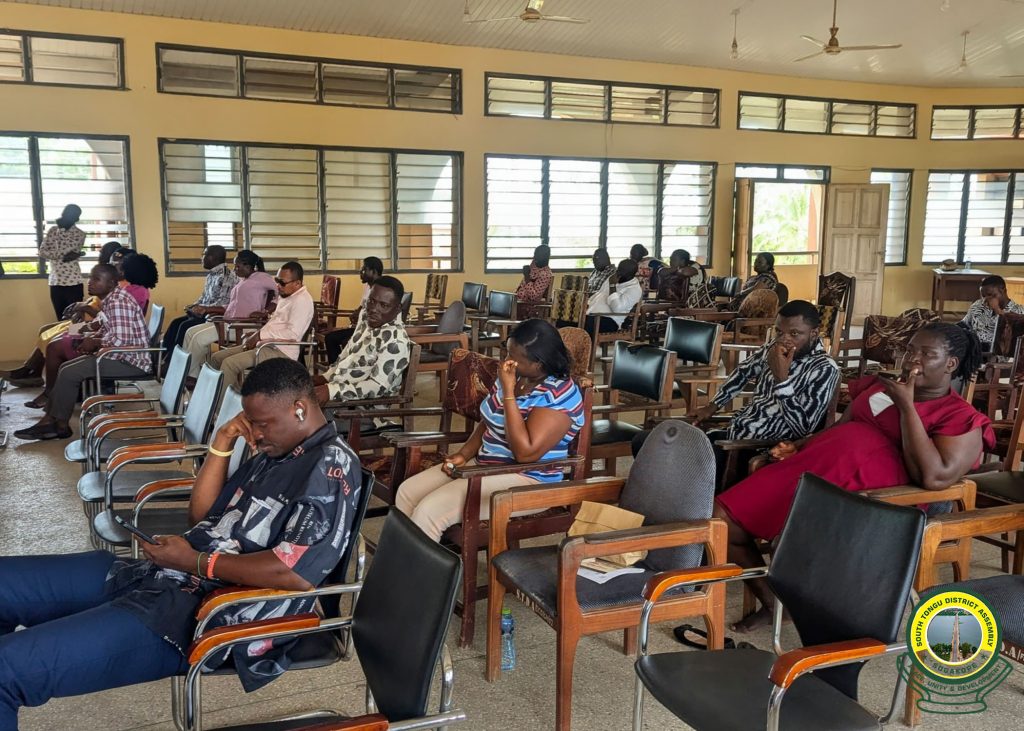
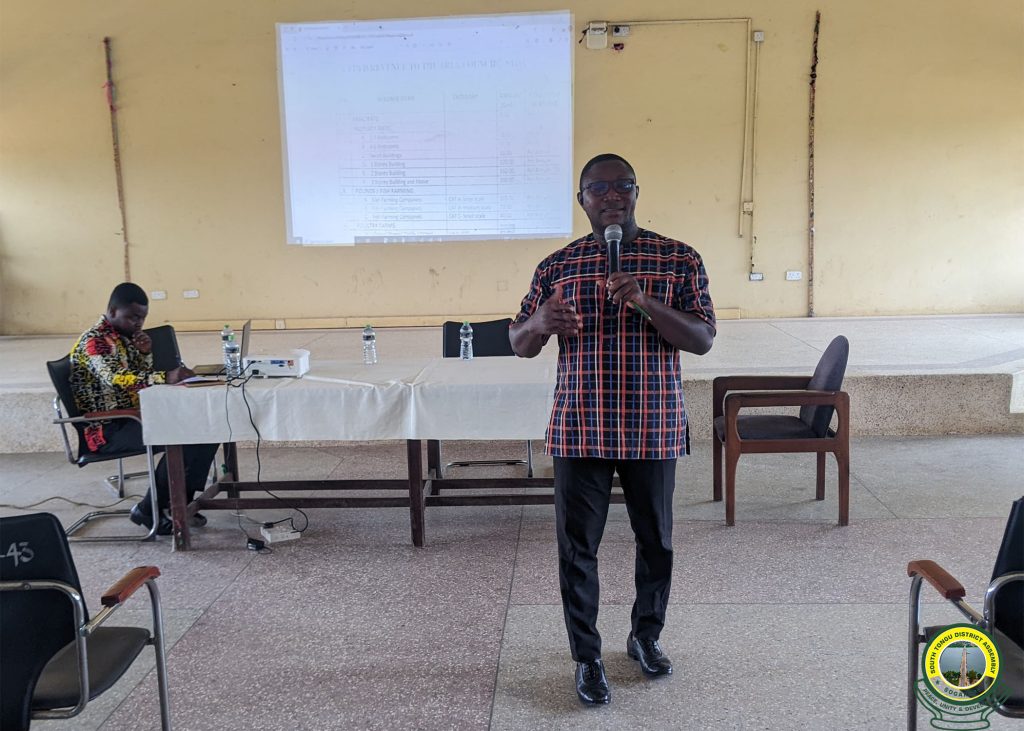
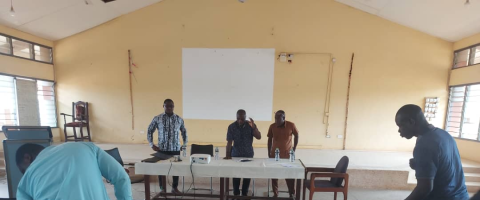
In view of the above, the South Tongu District Assembly organized a three-day training workshop for Budget Committee Members towards the preparation of the 2026-2029 Budget. The training took place at the South Tongu District Assembly Hall on Wednesday, 24th, Thursday 25th, and Friday 26th September 2025 respectively, as part of the Assembly’s Composite Budget Preparation Process. Members of the Budget Committee were present to refresh their knowledge on the requirements and expectations to ensure smooth budget preparation.
The meeting aimed to achieve the following objectives:
i. Build the capacity of Budget Committee members in budget preparation processes.
ii. Ensure compliance with the Public Financial Management Act 2016 (Act 921) and related regulations.
iii. Align South Tongu District Assembly’s Composite Budget with government priorities, Medium Term Development Plan, and Annual Action Plan.
iv. Strengthen financial management and accountability systems.
The District Internal Auditor, Mr. Issaku Haruna, acting on behalf of the District Co-ordinating Director/Chairman, emphasized the importance of the training in his opening remarks. He encouraged members to actively participate in the workshop.
The District Co-ordinating Director took over by encouraging members to count themselves fortunate and therefore should learn well to produce an implementable budget for 2026. He continued by stating that the purpose of the gathering was to comply with the rules governing budget preparation and to draft a document that would align with the MTDP.
The District Budget Officer, Mr. Afriyie-Boadi Ebenezer, took participants through the 2026-2029 Composite Budget Guidelines from the Ministry of Finance. He stated that it is expected of the Ministry to provide specific guidelines, and of MMDAs to comply strictly with the instructions given. He continued by stating that Program Based Budgeting is still in use, as well as Logical Frameworks. He stated that in pursuit of transparency, mutual accountability, and sound public financial management, government is expected to comply with the Public Financial Management Act, 2016 (Act 921), Public Procurement (Amendment) Act, 2025 (Act 1139), and Ghana’s Program with the International Monetary Fund (IMF).
He also stated that Principal Account Holders, Spending Officers, and their respective Budget Committees are required to ensure full compliance with all directives outlined in the budget preparation guidelines. Some focus areas were also given to prioritize, including reducing hardships, restoring investor confidence, restoring good governance and fighting corruption, and implementing bold and ambitious structural reforms.
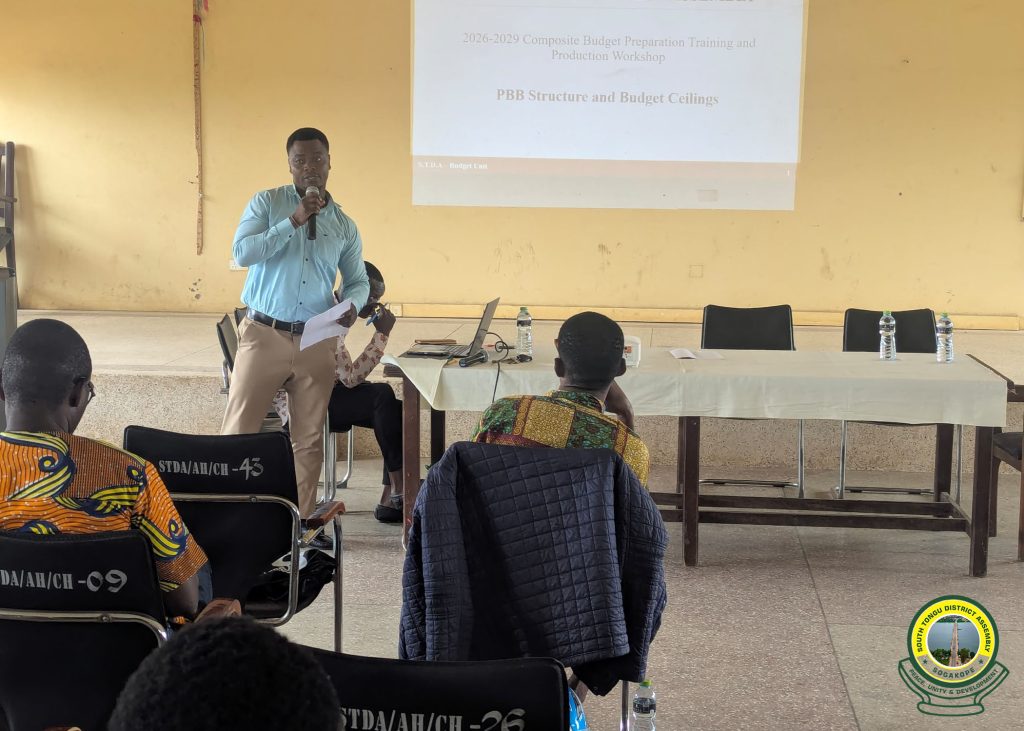
The District Assistant Budget Analyst, Mr. Amesimeku Seyram Hope, took participants through the PBB structure and the various budget ceilings. He stated that the 2026-2029 PBB structure has been broken into four parts:
He also took the participants through another presentation titled “Program Structure for the District Assembly.” He explained to the participants about the narratives, where he walked them through how to translate budget figures into word form. He further explained that the 2026-2029 PBB budget links departments’ activities to produce a well-defined budget.
The Human Resource Manager, Madam Florence Twiaku, walked the participants through budgeting for compensation of employees. She stated that this budget is prepared by the Software HR Capital Manager. She encouraged participants to use the appropriate chart of account codes, use the appropriate salary structure, budget according to staff establishment levels, and make provisions for allowances. She concluded that even though they have been instructed to make provisions for allowances, members should note that the allowances are subject to the availability of funds in the Assembly.
On the second day, the District Deputy Director, Mr. Frimpong Augustine, walked members through the PFM Act where he explained what the Act is about, the objectives, and cautioned the members to tread carefully in order not to commit government to excessive borrowing.
He further explained that for the district to achieve a credible budget, the members must make effective use of the compliance division, which also helps the Minister to stay within his spending limit.
The meeting/training was highly productive, providing valuable insights for members to produce an implementable budget for 2026. Members expressed optimism and agreed to work diligently to provide a transparent and accountable budget which will build trust, enhance revenue mobilisation, ensure efficient use of resources, and support the SDGs for 2026.